Prizes for Nonproft Mergers and Partnerships
An account of the recipients of the Lodestar Foundation and the Arizona-Indiana-Michigan Alliance (AIM)'s prize for the best nonprofit collaboration in the country.
An account of the recipients of the Lodestar Foundation and the Arizona-Indiana-Michigan Alliance (AIM)'s prize for the best nonprofit collaboration in the country.
Vinod Khosla, Silicon Valley venture capitalist, says he used to be an environmentalist, but is now more of a "pragmentalist." In this Stanford Center for Social Innovation sponsored audio lecture, Khosla turns conventional wisdom about what passes for "green technology" on its head. He takes a hard look at how innovations such as hybrid cars and fuel cell buses may, in fact, be exacerbating our problems, and offers concrete, iconoclastic suggestions as to what science, business, and government should be focusing on instead.
A top ten list of ways to enhance your leadership in the nonprofit field.
Great leadership is all about the ability to design social systems.

America's primary and secondary education lags behind that of other advanced countries. In this panel discussion, hosted by the New Republic, experts argue that improving the quality of education would generate enough economic growth to pay for the entire education system itself. They suggest catching up will require cooperation, national standards, better incentives for teachers, and accountability.
Social entrepreneurism should focus less on charismatic personalities and more on ideas that work.
The Lodestar Foundation supports nonprofit collaborations, mergers, and other cooperative activities as a major strategy.

Nonprofits rely heavily on volunteers, but most CEOs do a poor job of managing them. As a result, more than one-third of those who volunteer one year do not donate their time the next year.
How does an organization get through the evaluation process and live to tell about it? In this panel, part of the Stanford Social Innovation Review's conference on evaluation, funders and fundees on both sides of the table from a variety of organizations in the areas of education and social services talk about what it was like to be in the trenches of successful evaluation processes. They tease out common success factors, including how to work collaboratively across sectors and with multiple constituents.
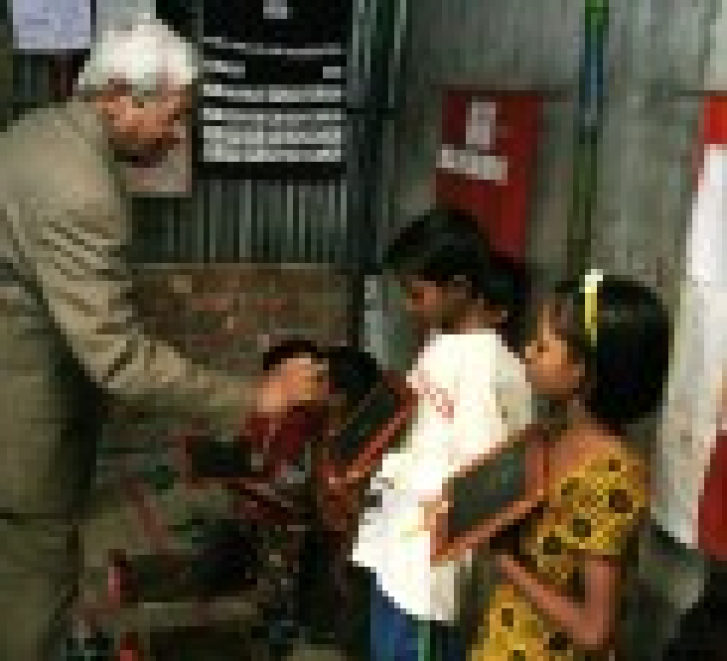
Serving more than 110 million people per year, BRAC is the largest nonprofit in the world. Yet it doesn't receive the most charitable donations. Instead, BRAC's social enterprises generate 80 percent of the organization's annual budget. These revenues have allowed the organization to develop, test, and replicate some of the world's most innovative antipoverty programs.